Concrete Contractor Insurance in California
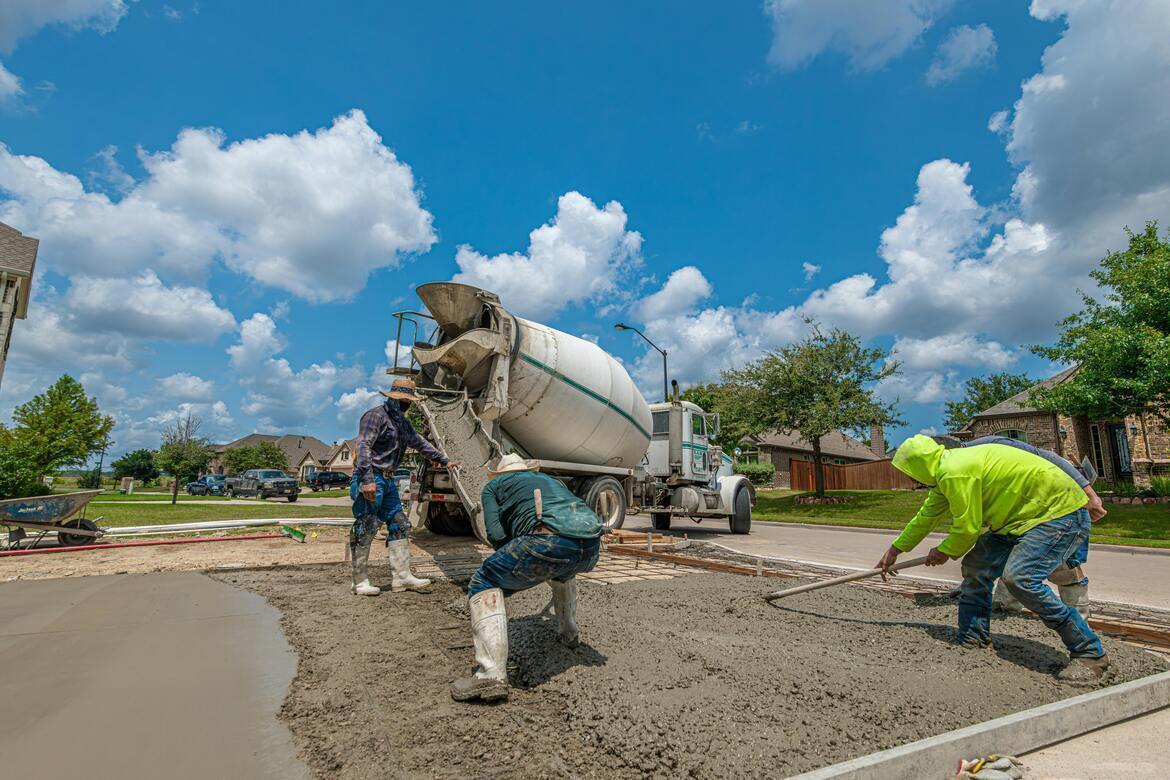

Concrete contractors throughout California face unique risks every day. Whether you install foundations, pour driveways, construct sidewalks, build retaining walls, or complete large commercial flatwork projects, the right concrete contractor insurance helps protect your business, your employees, and your reputation.
From employee injuries and heavy equipment accidents to property damage, completed operations claims, and expensive tools, concrete contractors need insurance designed around how they actually operate.
At ECHO Business Insurance Services, we help concrete contractors build insurance programs based on their services, payroll, project types, equipment, vehicles, subcontractors, and contractual requirements.
Concrete contractors work on residential homes, commercial developments, warehouses, parking lots, sidewalks, foundations, and industrial projects. Every project involves unique risks depending on excavation, reinforcement, pumping, finishing, and curing operations.
As an independent insurance agency, we compare coverage options from multiple insurance companies to help design insurance that reflects your actual operations instead of relying on a generic contractor policy.
We review your services, annual revenue, payroll, employee duties, equipment, vehicles, subcontractor exposure, and project size before recommending coverage.
Concrete contractors may face claims involving:
A properly designed insurance program can help reduce the financial impact of these risks while helping your business qualify for residential and commercial construction projects.
Depending on your operations, concrete contractor insurance may include:
Not every concrete contractor needs every coverage. Our goal is to recommend insurance that matches your operations, equipment, and contractual requirements.
Many concrete claims arise after the project has been completed. Customers may allege cracking, settling, uneven surfaces, drainage issues, or other problems months after construction.
Concrete contractors should review whether their General Liability policy includes appropriate completed operations coverage and understand how policy exclusions may apply.
Concrete contractors regularly operate heavy machinery including skid steers, excavators, compactors, concrete pumps, mixers, and saws. These machines create additional risks for employees, nearby property, and the public.
Insurance should reflect both the value of your equipment and how it is transported and used between job sites.
Some concrete contractors hire subcontractors for excavation, forming, rebar installation, finishing, or pumping services. Proper risk transfer helps reduce potential liability.
Subcontractor insurance should be reviewed before work begins and monitored at renewal.
General contractors, developers, municipalities, HOAs, and commercial property owners often require proof of insurance before concrete work begins.
We help review insurance requirements and issue Certificates of Insurance quickly so projects stay on schedule.
Unlike agencies that represent only one insurance company, we compare multiple carriers to help find competitive insurance options based on your concrete operations.
Our goal is to make concrete contractor insurance straightforward, competitive, and aligned with how your business operates.
Many concrete contractors carry General Liability, Workers' Compensation, Commercial Auto, Tools and Equipment coverage, Contractor Bonds, and Commercial Umbrella Insurance. Coverage depends on the services you perform and your contractual requirements.
General Liability may help cover certain resulting property damage arising from covered operations. Coverage depends on the policy language, exclusions, endorsements, and circumstances of the claim. It generally does not pay to replace defective work itself.
Concrete pumps, saws, mixers, laser levels, generators, and other contractor equipment may be covered under Inland Marine or Contractor's Equipment coverage, subject to policy terms, limits, and deductibles.
If your business owns trucks, trailers, or other work vehicles, Commercial Auto Insurance is generally recommended to help protect against liability and physical damage claims.
Many insurance carriers can insure both residential and commercial concrete operations when they are properly disclosed during underwriting.
Whether you're pouring foundations, installing sidewalks, building retaining walls, or completing large commercial flatwork projects, having the right insurance helps protect your business from unexpected losses.
Contact us to speak with an experienced business insurance advisor about Concrete Contractor Insurance in California.
Looking for broader contractor coverage? Visit our Contractors Insurance page to explore insurance solutions for contractors throughout California.